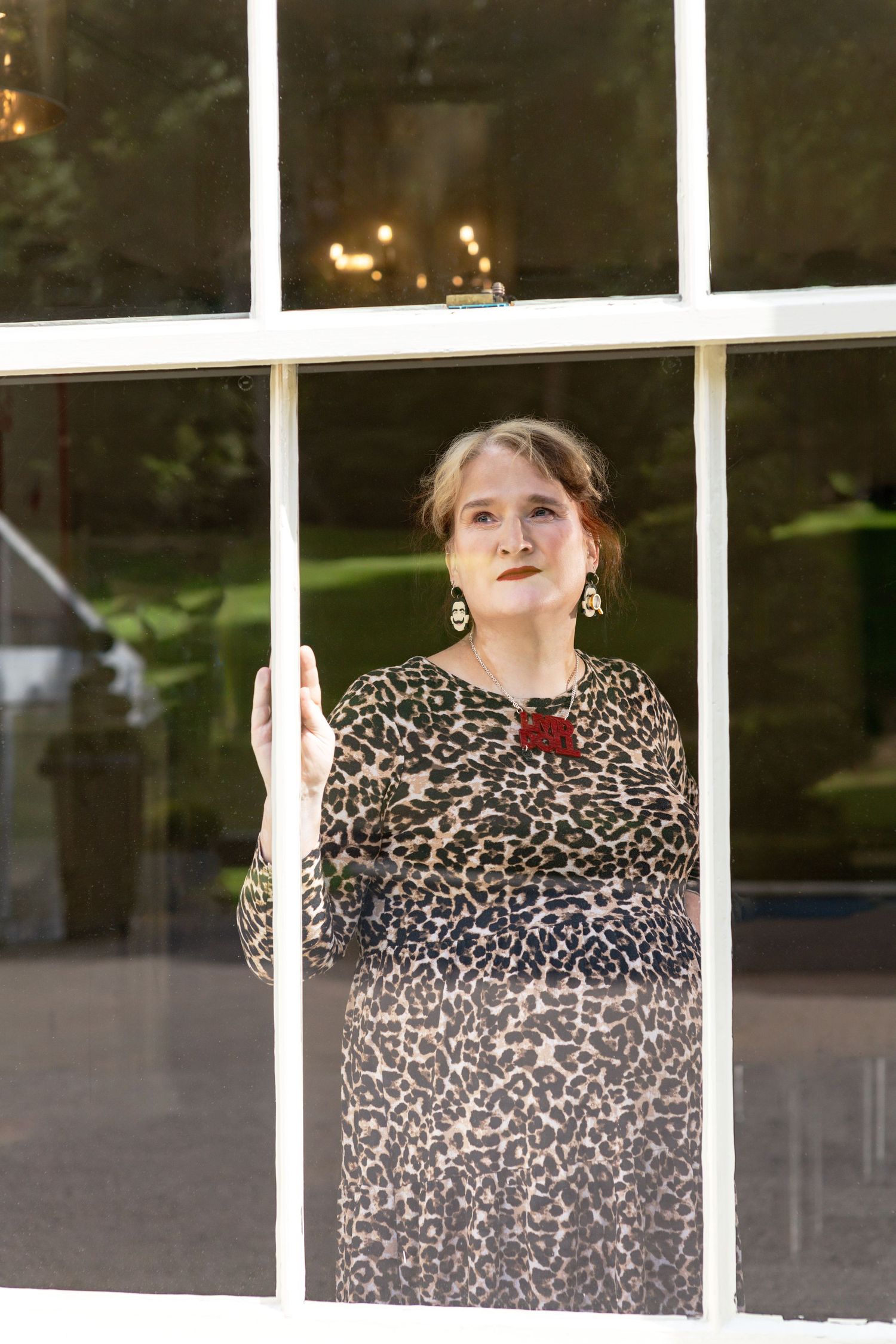
Suffolk photographer John Ferguson reflects on home and belonging through his portrait of H.E. Ross aboard his houseboat in Woodbridge. The photograph is one of 20 environmental portraits he made for Black Suffolk, a project commissioned by Ipswich-based Aspire Black Suffolk.
When Aspire Black Suffolk approached me to create a photographic series, they gave me the freedom to decide what I wanted to photograph. I had a few ideas. Then I came across a book in my office that I hadn’t read for years. It was by Dawoud Bey, the Black American photographer whose work has influenced mine in one way or another for much of my career. Finding that book again helped me settle on the question I wanted to ask. What does it mean to call Suffolk home as a Black person living in a predominantly white, rural part of Britain?
Documentary portraiture is where I feel closest to Bey’s work.
I’ve often read his photographs through the political questions they raise about Black life in America. My starting point for Black Suffolk was the texture of everyday life. I wanted to photograph Black people as individuals, giving them a chance to see who we are, what we do and what we contribute. That curiosity has taken me to very different places over the years. It’s there in my photographs of Black cowboys in the American South, and it’s there in a portrait of a man who lives on a houseboat in Woodbridge in the UK.
My work has given me the good fortune to travel widely. I’ve seen anti-black prejudice in very different parts of the world, in many different forms, and on occasion I’ve experienced it myself. Those encounters have made me think about who I want to reach with these photographs. The audience I have in mind is wider than white Britain. I’m also thinking of Black people who might recognise something of their own lives in the work, and of anyone whose understanding of Black life has been shaped by the narrow range of lives they’ve been shown.
Suffolk was where I could ask that question with some knowledge of my own. I live here. I wanted to see more of the people I knew in the photographs, to tell their stories of this county. The commission became a series of 20 environmental portraits, and the theme of home gave me a way to approach each one. I was interested in where people spent their time, what they kept close and what they did so often that it barely warranted a mention.
A visitor on the boat
I was introduced to H.E. Ross through the project and went to photograph him aboard his houseboat in Woodbridge, Suffolk. He lived there with his wife, their two boys and a cat. There was equipment dotted around the deck, some of it heavy, and I found myself watching how he moved through it. He seemed to dance his way from one side of the boat to the other.
As a visitor, I was still taking in what was around me. Ross already knew where to put his feet and how to handle the equipment. Why would he give any of it a second thought? He did these things all the time. I’d come with a question about home, and there was something of an answer in the way he crossed his deck.
I wanted to see whether a still photograph could hold some of that ease. The heavy ropes caught my eye because they gave his hands something familiar to do. So I asked if I could photograph him working with them. He wasn’t keen at all.
The last setup
I put the idea aside and carried on with the session. I’m glad Ross pushed back a bit. When you arrive with a camera and an idea, it’s easy to get carried away by the picture you can already see in your head. If somebody came into my home and asked to photograph me doing something I did every day, I’d probably want to know what on earth they found so interesting about it.
I came back to the ropes for the last setup. By then we’d had more time together, and I hoped he might enjoy giving it a go. I could decide where to stand and what to include in the frame. The part of the picture I was most interested in was something Ross brought to it himself. He knew those ropes, and you could see it in the way he used his hands.
Days later, when I showed him the finished photograph, he was surprised by how much he liked it. I still remember how pleased he was. It’s one of the pleasures of photographing people in places they know well. Something they hardly give a second thought to can be the thing you remember about them years later.
What a county keeps
Ipswich Museum later acquired Black Suffolk for its permanent art collection. I’m pleased those portraits have a home there. Someone growing up in Suffolk can come across them years from now and see something of the lives that were being lived here when I made them.
https://ipswich.cimuseums.org.uk/an-eye-for-life
There’s a great deal a single photograph can leave out. Someone looking at Ross’s portrait may never know about his family, the cat or our conversation about those ropes. They’ll still find H.E. Ross aboard his houseboat in Woodbridge, his hands at work. I’m glad that this small, ordinary part of his life is now part of Suffolk’s record.